
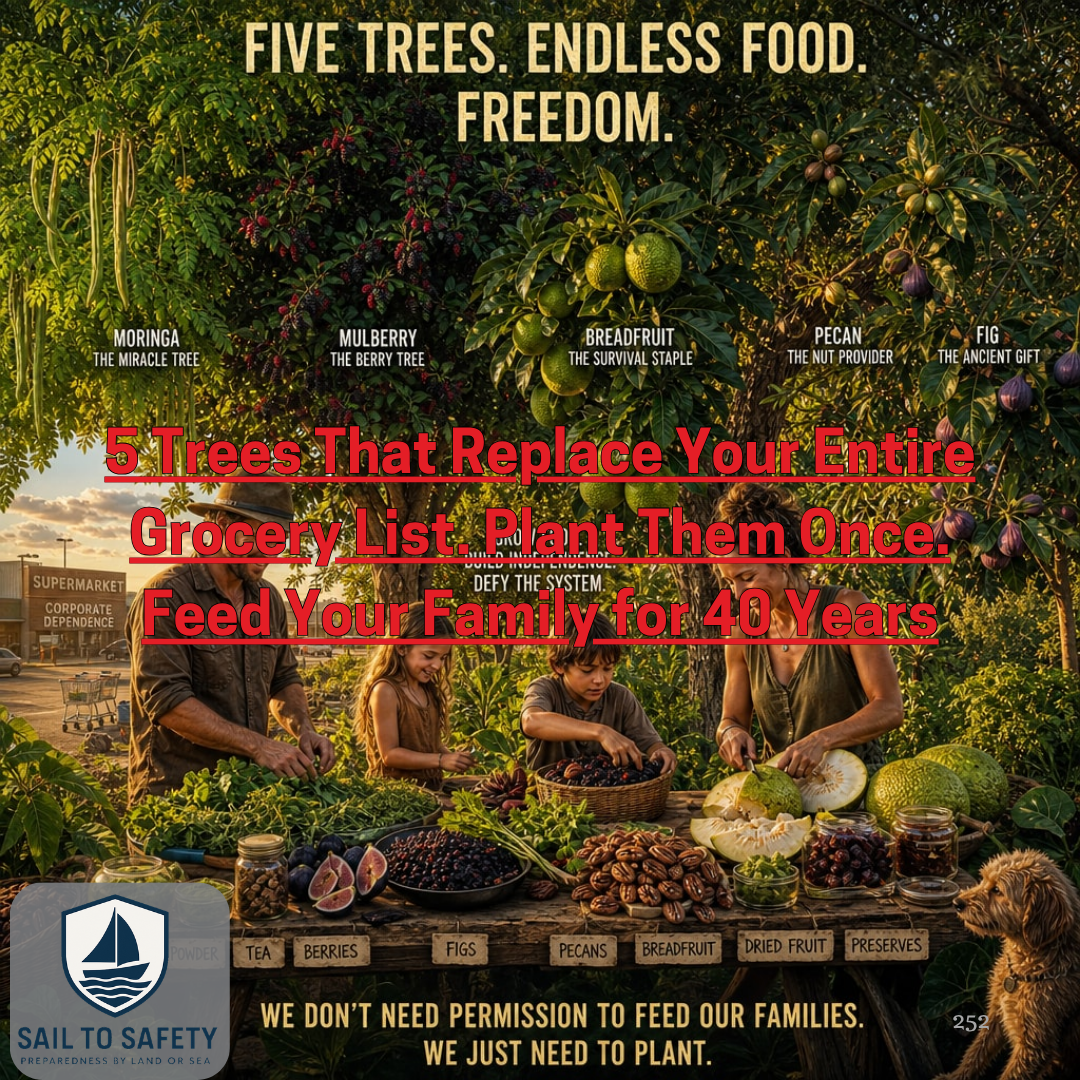
What if I told you there are five trees? Not crops, not annuals, not anything you have to replant every spring. Five trees that between them produce more protein per acre than beef, more calcium per gram than milk, more vitamin C per serving than oranges, more potassium than bananas, more iron than spinach, and more healthy fat than any seed oil on a grocery store shelf. All from your own backyard.
The average American family spends over $12,000 a year on groceries. That number has risen every single year for the past decade. And the food they are buying is traveling an average of 1,500 miles from farm to plate, losing nutrients with every mile and every hour between harvest and consumption.
By the time that bag of spinach reaches your refrigerator, it has lost up to 90% of its vitamin C. Now here's the part nobody in the industrial food system wants you to think about. A single moringa tree, one tree, produces over 100 pounds of edible leaves per year. Those leaves contain all nine essential amino acids, more protein by dry weight than eggs, more iron than a steak, more calcium than a glass of milk.
That tree costs $3 as a seedling. It grows to harvestable height in under a year, and it keeps producing for 30 to 40 years. One tree, $3, four decades of nutrition.
The other four trees are equally remarkable and equally forgotten. Together, the five of them cost less than a single trip to the grocery store. They require no fertilizer, no pesticide, no tractor, and no corporation between you and your food.
They have fed civilizations for thousands of years. They were the backbone of diets that modern research now calls some of the healthiest ever recorded. And one by one, for reasons that have everything to do with profit and nothing to do with science, they were replaced, suppressed, banned, or simply erased from public memory.
Today, we are opening the file on the five trees they do not want you to plant.
Number One, Moringa
 We start with the tree the World Health Organization once called the most nutrient-dense plant ever studied, moringa oleifera.
Moringa is native to the foothills of the Himalayas in northern India. It has been cultivated for over 5,000 years. Ayurvedic medical texts dating to 2,000 BCE describe it as shigru, the tree that cures 300 diseases.
Ancient Egyptians used moringa oil for skin protection and as a base for perfume. The Romans imported it along trade routes from the east. The Greeks wrote about it.
And then it vanished from Western consciousness entirely. Here is what the nutritional science says. A peer-reviewed study published in the journal Ecology of Food and Nutrition confirmed that dried moringa leaves contain approximately 27% protein by weight.
That is higher than eggs, higher than milk, and competitive with chicken breast. But unlike animal protein, moringa protein comes packaged with all nine essential amino acids, something almost unheard of in the plant kingdom. The mineral content is equally staggering.
Gram for gram, moringa leaves provide 17 times more calcium than milk, 25 times more iron than spinach, 15 times more potassium than bananas, and 7 times more vitamin C than oranges by dry weight comparison. They also contain significant concentrations of vitamin A, vitamin E, zinc, magnesium, and B-complex vitamins. A single mature moringa tree can be harvested 7 to 10 times per year.
Each harvest yields between 10 and 15 pounds of fresh leaves. That is over 100 pounds of fresh, edible, nutritionally complete food per year from a single tree that grows in poor soil, tolerates drought, requires no pesticide, and can reach 10 feet in its first year alone. The leaves can be eaten fresh like spinach, dried and ground into a powder that stores for over a year at room temperature, brewed as tea or added to soups and stews.
The seed pods, called drumsticks, are eaten as a vegetable across South Asia and Africa. The seeds can be pressed into an oil that is comparable to olive oil in its fatty acid profile. Even the bark and roots have documented traditional uses.
Moringa seedlings cost between $3 and $5. Seeds cost less than $1 for a packet of 10. In tropical and subtropical climates, a moringa tree requires almost zero maintenance after its first season.
In temperate climates, it can be grown as a fast-growing annual or kept in containers and brought indoors for winter. Either way, one tree every year produces more absorbable nutrition than hundreds of dollars worth of supplements and grocery store produce. And here is the part that belongs in this vault.
Despite being called the most nutritious tree on earth by researchers, despite being endorsed by humanitarian organizations worldwide for fighting malnutrition, moringa is virtually unknown in the western supermarket system. You will not find fresh moringa leaves at any major American grocery chain. You will find moringa powder in capsules at a health food store for $25 to $40 a bottle.
The supplement industry took a tree you can grow for $3 and turned its leaves into a product they sell back to you at a 4,000% markup. Number two, mulberry.
Number Two, Mulberry
 Tree number two is one of the most productive fruit trees on earth.
And in multiple American cities, it is illegal to plant one. The mulberry tree, genus Morris, produces a berry that contains 12 to 18% protein by dry weight. That is extraordinary for a fruit.
Most fruits contain between 1 and 3% protein. Mulberries also contain high concentrations of iron, vitamin C, vitamin K, potassium, and a class of antioxidants called anthocyanins that have been linked to reduced cardiovascular disease risk in multiple published studies. A single mature mulberry tree produces between 60 and 100 pounds of fruit per season.
Some varieties produce significantly more. The fruit ripens over a period of several weeks, providing a continuous harvest rather than a single overwhelming glut. The berries can be eaten fresh off the tree, dried like raisins and stored for over a year, made into jams, syrups, juices, wine, or ground into flour that can replace a portion of wheat flour in baking.
The leaves of the mulberry tree are edible as well. They have been eaten in Asia for thousands of years and are one of the primary food sources used in traditional Chinese and Korean medicine for blood sugar regulation. A 2018 study published in the Journal of Functional Foods found that mulberry leaf extract reduced postprandial blood glucose spikes by up to 27% in human subjects.
The mulberry tree will grow in almost any soil. It tolerates drought, poor drainage, and urban pollution. It produces fruit within two to three years of planting.
It lives between 30 and 75 years depending on the species. A bare-root mulberry sapling costs between $3 and $8 at most nurseries. And here is why this tree is in the vault.
In 1984, the city of El Paso, Texas banned the planting of new mulberry trees. Albuquerque, New Mexico followed. Tucson, Arizona followed.
Las Vegas followed. Phoenix followed. The official reason cited was pollen.
Mulberry trees produce a significant amount of pollen in spring, which contributes to seasonal allergies. But here is what the allergy argument does not tell you. Fruitless male mulberry cultivars, planted specifically because they do not produce the messy berries that fruiting trees produce, are the primary source of that pollen.
The fruiting female trees produce drastically less pollen. The city's banned all mulberry trees, including the female fruiting varieties that produce food, to solve a problem created by the ornamental male varieties that landscape companies had been planting for decades because they did not drop fruit on sidewalks. The result was that one of the most productive, nutritious, low-maintenance fruit trees in the temperate world was effectively criminalized in the American Southwest.
A tree that feeds families was banned because the version of it that produces no food made people sneeze. And rather than ban the fruitless ornamental variety and keep the food producing one, they banned the entire species. A mulberry tree sapling costs about $5.
In a single season, it produces food that would cost over $200 to buy at a farmer's market. Over its lifetime, a single tree produces thousands of dollars worth of nutrient-dense fruit. And in several major American cities, planting one in your yard could result in a fine.
Number Three, Breadfruit
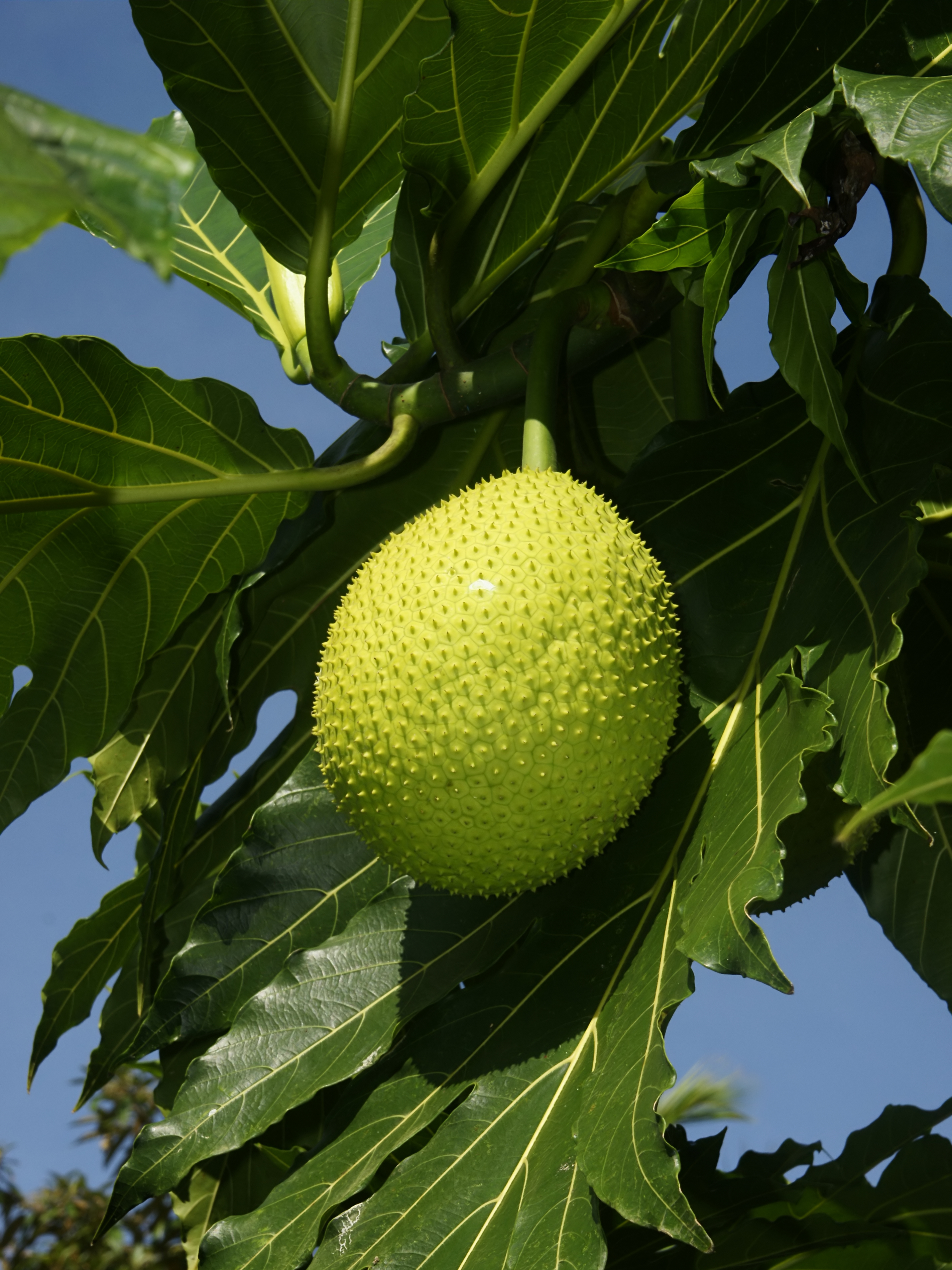 Tree number three caused a mutiny, literally. In 1787, the British Admiralty sent Lieutenant William Bly aboard HMS Bounty on a mission to collect breadfruit trees from Tahiti and transport them to the Caribbean.
The purpose was not nutritional generosity. The purpose was economic. British plantation owners needed a cheap, calorie-dense food to keep enslaved Africans alive at the lowest possible cost.
Breadfruit was the answer. The mutiny happened. Bly was set adrift, but he survived.
The enslaved people refused to eat it. They fed it to pigs. But the tree itself is one of the most extraordinary food plants ever documented.
A single mature breadfruit tree produces between 150 and 200 fruits per year. Each fruit weighs 2 to 5 pounds. At 14,000 pounds per acre at maturity, breadfruit is one of the highest-yielding food crops in the world.
For context, corn averages 9,000 pounds per acre. Wheat averages 3,000. Nutritionally, breadfruit is a complex carbohydrate, similar to potato but with more fiber, more potassium, and a broader amino acid profile.
It can be boiled, roasted, fried, baked, dried, and ground into a preserved paste that stores for months. One tree can feed a family of four its primary starch source for an entire year. The tree requires almost no care once established.
It does not need fertilizer. It does not need pesticides. It produces fruit for 50 to 100 years.
And because breadfruit is propagated from root cuttings rather than seeds, every tree is genetically identical to its parent, meaning the quality is consistent across generations. A breadfruit sapling costs between $5 and $10. One tree.
Decades of food. In a world where the price of flour has risen 28% in the last four years, breadfruit grows naturally in tropical and subtropical zones, which covers Hawaii, southern Florida, Puerto Rico, the U.S. Virgin Islands, and all territories where millions of Americans live. For the rest of the continental United States, recent research at the Breadfruit Institute in Hawaii has been developing cold-tolerant cultivars that extend the range northward.
And for anyone with a greenhouse or a large sunny room, breadfruit can be grown in containers. The tree that the British Empire shipped across the world to feed enslaved people now has the documented nutritional potential to reduce food costs and food insecurity in the very communities that industrial agriculture is priced out of a healthy diet. But there is no breadfruit lobby.
There is no breadfruit growers association. There is no industry behind a tree that anyone can plant once and harvest for a lifetime.
Number Four, Pecan
 Tree number four is the only major tree nut native to North America, and before European colonization, it was one of the most important food sources on the continent. The word pecan comes from the Algonquin word pecan, meaning a nut requiring a stone to crack. For thousands of years, indigenous peoples across the southern and central United States relied on pecan trees as a staple food.
The Comanche, the Caddo, the Coahuiltecan, and dozens of other nations harvested pecans and stored them as a calorie-dense winter food that could sustain families through months of scarcity. The Comanche word for the pecan season was the word for the month of December. A single mature pecan tree produces between 70 and 150 pounds of nuts per year.
Some trees produce over 200 pounds in a good year. Those nuts contain 72% fat, primarily monounsaturated oleic acid, the same heart-healthy fat found in olive oil. Pecans also contain 9% protein, significant fiber, magnesium, zinc, phosphorus, thiamine, and manganese.
They are one of the most calorie-dense foods in existence, containing over 690 calories per 100 grams, which makes them an extraordinary survival food. A pecan tree lives for over 100 years. Many live over 200.
There are documented pecan trees in Texas that are over 300 years old and still producing. That means a pecan tree could feed your grandchildren's grandchildren. A bare-root pecan sapling costs between $3 and $8 from most nurseries.
The tree does require patience. It takes 5 to 10 years to begin producing significant quantities. But here is the calculation nobody in the industrial nut industry wants you to do.
A single pecan tree, over a productive lifespan of 100 years, will produce somewhere between 7,000 and 15,000 pounds of shelled pecans. At current retail prices of $12 to $18 per pound, that is between $84,000 and $270,000 worth of food from a tree that costs less than a fast-food meal to plant. Before colonization, North America contained billions of pecan trees growing wild along river bottoms, from Illinois to the Gulf of Mexico.
Indigenous peoples did not farm them. They simply harvested what the forest provided. European settlers cleared millions of acres of those pecan forests for cotton, corn, and cattle.
They replaced a perennial food source that required zero labor, zero irrigation, and zero inputs with annual crops that depleted the soil within decades. That is not a failure of agriculture. That is a choice.
A choice between a food system that sustains itself for centuries and a food system that generates quarterly profits. The pecan tree was on this continent for 10,000 years before the plow arrived. It will be here long after the last tractor runs out of diesel.
Number five, Fig.
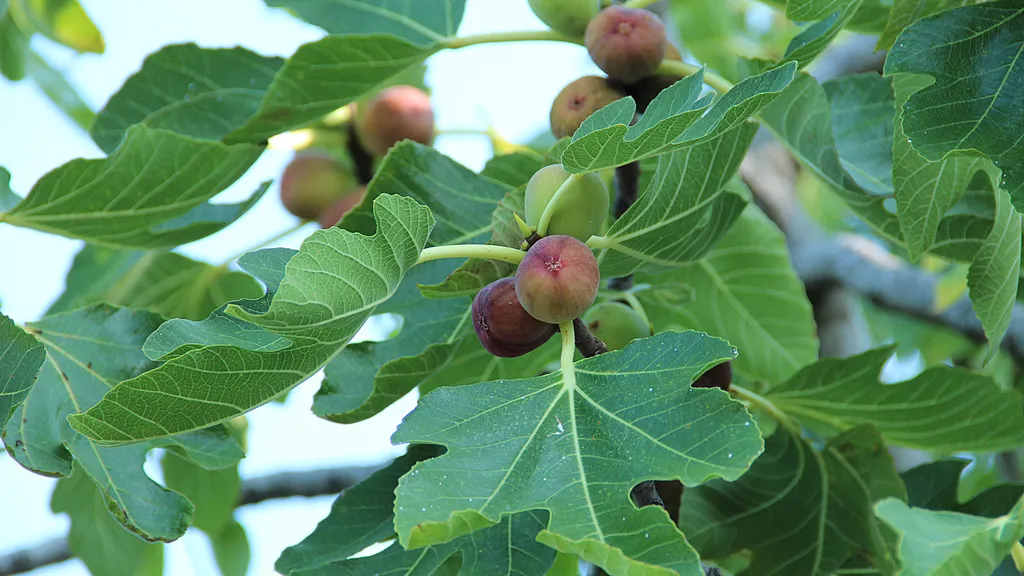 Tree number five is arguably the oldest cultivated plant in human history.
Older than wheat. Older than barley. Older than rice.
In 2006, archaeologists in the Jordan Valley discovered carbonized fig remains dating to 11 to 400 years ago. That is a thousand years before the first grains were cultivated. The researchers concluded that the fig may have been the first plant humans intentionally grew.
The birth of agriculture may not have begun with a field. It may have begun with a tree. The ancient Greeks considered figs one of their primary foods.
Not a luxury, but a staple. Plato called himself a lover of figs. Athenaeus recorded that Athenians passed laws prohibiting the export of the best figs, reserving them for domestic consumption.
The word sycophant literally derives from the Greek sycophantes, meaning one who reveals figs. A reference to informants who reported those who illegally exported the fruit. The fig was so central to Greek life that betraying its trade was a crime worthy of its own vocabulary.
Roman legions carried dried figs on military campaigns as a high-energy food. The armies of Alexander the Great ate figs as a primary source of calories during their march across Asia. Figs are mentioned more than 50 times in the Bible.
Here is the nutritional reality. Fresh figs provide significant potassium, calcium, magnesium, iron, vitamin B6, and vitamin K. Dried figs are even more nutrient dense, containing three to five times the mineral concentration of fresh figs due to water removal. 100 grams of dried figs contains 162 milligrams of calcium, more than an equivalent serving of milk.
They also provide 2 grams of protein, 10 grams of fiber, and 680 milligrams of potassium per 100 grams. A fig tree begins producing fruit within one to two years of planting. A mature fig tree produces between 20 and 60 pounds of fruit per year, sometimes significantly more.
Figs can be eaten fresh, dried for year-round storage without any equipment or chemicals, cooked into preserves, or fermented into vinegar. Fig trees are remarkably hardy. They grow in poor soil, tolerate drought once established, and many varieties survive temperatures as low as 10 degrees Fahrenheit.
They grow across virtually the entire continental United States. They require no pesticides. They have very few pest problems.
A mature fig tree lives 50 to 100 years, and many live considerably longer. A fig tree sapling costs between three dollars and eight dollars. Let that sit for a moment.
A food source that has sustained human civilization for over 11,000 years, that produces calories, fiber, calcium, and potassium, that requires no spraying, no fertilizing, no annual replanting, that dries naturally in the sun for shelf-stable storage without electricity, that a child can harvest without equipment, and it costs less than a cup of coffee at a gas station.
Here is the math the industrial food system does not want you to see.
- One moringa seedling. Three dollars.
- One mulberry sapling. Five to dollars.
- One breadfruit sapling. Seven.
- One pecan sapling. Four dollars.
- One fig sapling. Three dollars.
Total cost, $22.
- Year one, the moringa and the fig are already producing food.
- Year two, the mulberry joins them.
- Year three to five, the breadfruit begins.
- Year five to ten, the pecan comes online.
By year ten, five trees are producing simultaneously.
Fresh greens and complete protein from the moringa. Antioxidant-rich berries and blood sugar regulating leaves from the mulberry. Calorie-dense starch from the breadfruit.
Heart-healthy fats and calorically dense nuts from the pecan. Fiber, calcium, and potassium from the fig. Vitamins A, B, C, E, and K covered across the five species.
All nine essential amino acids represented. Complex carbohydrates, healthy fats, complete protein, fiber, minerals. This is not supplementation.
This is a grocery list produced in your own yard. Requiring no supply chain, no fuel for transportation, no packaging, no refrigeration for the dried versions, and no monthly subscription. $22.
One afternoon of planting. 40 years of harvest. The average American family will spend approximately $480,000 on groceries over the next 40 years at current prices.
These five trees will not eliminate that number, but they will replace the most expensive, most nutrient deficient, and most supply chain vulnerable portions of it with food that grows 15 feet from your kitchen door.
Five civilizations knew this.
- The Indians who grew moringa.
- The Chinese who cultivated mulberries.
- The Polynesians who spread breadfruit across the Pacific.
- The indigenous Americans who harvested pecans.
- The Mesopotamians who planted the first figs.
Five civilizations. Five trees.
Five food systems that sustained populations for thousands of years without a single refrigerated truck, chemical fertilizer, or single plastic package. Everything old is not outdated. Sometimes, everything old is just waiting to be remembered.